
Curlew Sandpipers at RSPB Leighton Moss : 5th September 2013
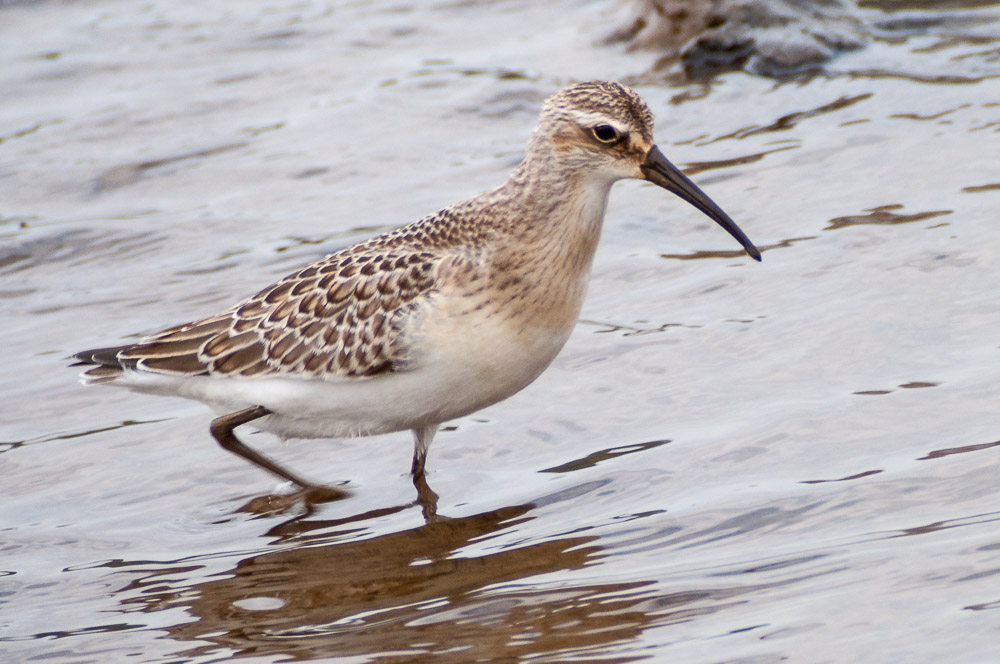
Curlew Sandpiper Leighton Moss
Still flushed with our success with the Stilt Sandpiper the previous day we thought we would head up to the RSPB Leighton Moss site where there had been really large numbers of Curlew Sandpipers reported recently. We had seen a single Curlew Sandpiper before (on 17th September 2012 at Inner Marsh Farm) but it wasn’t the closest of views and was a little brief. We drove up there and parked in the newly expanded car park for a quick cup of tea before going down the road to the Eric Morecambe and Allen hides. We stopped at the Allen hide which has newly re-opened and is now very comfortable and enlarged. However, the view was a bit of a disappointment with a complete lack of birds except a few Redshank. We were starting to get a little worried but we looked over the Eric Morecambe hide and we could see that there were more birds over there so we quickly decamped and headed for there. This hide had also been giver a considerable makeover and now has long windows overlooking substantial areas of mudflat and islets.
We need not have worried about missing the Curlew Sandpipers because looking out of the right side window we could see maybe eighty or so Redshanks and in amongst them perhaps about eighteen Curlew Sandpipers coming to within about 20 metres of the hide and giving views so good that it must surely be impossible for us not to recognise one ever in the future. The black, decurved bill, white supercillium, black legs, white underparts and peachy blush on the chest were all easily visible. I don’t know how unusual such large numbers of Curlew Sandpipers are but I have only ever heard of either isolated individuals or small groups of half a dozen or so so this was a great treat. The Leighton Moss web site had actually been reporting 28 on some days. In amongst the Redshanks were a couple of Spotted Redshanks in their winter plumage and a single Ruff flew in giving us an interesting close comparison between the Sandpipers and a Ruff.
(There were several photographers lined up along the windows and there were frequent burst of shutter fire. Interestingly, I had always thought that Nikon cameras were much louder than Canons but I think I might have re re-appraise that impression now.)
From the left side window there was a big roost of Black-tailed Godwits and Lapwings and in abroken line at the edge of a group of Godwits were individual and pairs of Greenshanks – perhaps seven in total. They were doing their best to be inconspicuous but eventually they got bored and lifted their bills up and stretched and preened a bit making identification easier. There were also some Shoveler, Mallard and Teal also roosting and further out towards the bay three Little Egrets wandered in and out of little ruts continually appearing and then disappearing. A few Starlings and a couple of Grey Herons were also seen but there was a further little bit of excitement when a Kingfisher flashed past the hide and then settled on a post at the back of one of the pools. It disappeared and then a little later we saw one a little further to the right of the post where we again saw it hovering in the air, clear against a blue sky background, before plunging down into some unseen rivulet. In fact it became clear that we were looking at two different birds and a couple of observers in the hide thought they had seen three in total.
It was hard to beat all that and in the end this hide proved to be the major attraction of the day. At lunchtime we headed back to the reception area and had a packed lunch sitting next to the new “sensory garden” that has been built where there had previously been a parking area. The whole area has been revamped and its all pergolas and benches now ! This looks to me like it will have a negative effect on the bird feeding station that previously could only be seen from behind a screen. Now it is much more open and visitors will clearly be more intrusive than they were before. Be that as it may we still managed to see Blue and Great Tits, Chaffinches, Greenfinches and a couple of Bullfich and a Nuthatch.
We then went down to Lilian’s hide but apart from a couple of hundred Coot and a few Shovelers and Gadwall and Mallards there wasn’t a lot. We might also expect to have seen Marsh Harriers as well – especially since they have had a record breeding year with 14 birds fledged from 5 successful nests, their best breeding year ever. However, it seems that they all left for Africa towards the second half of August.
We took a walk from there down to the causeway where there had been reported sightings of Bearded Tits on the grit trays. We didn’t see them, naturally; in fact I have only ever heard of them being seen on the grit trays very early in the morning. At the public hide there were a few Coots and a single Great-crested Grebe but that was about it.
We just had enough time to head back down to the Tim Jackson and Griesdale hide but, again, there wasn’t much to be seen except some nice views of Deer. We did see a rather moulting Red-legged Partridge and there were still some House Martins and Swallows flying around but clearly the highlight of the day had been nearer Morecambe Bay and the Eric Morecambe hide which had made the journey worthwhile in itself.
Bird Sightings : RSPB Leighton Moss : Eric Morecambe Hide
| Species | Count |
|---|---|
| Mute Swan | 2 |
| Teal | 20 |
| Mallard | 40 |
| Shoveler | 8 |
| Little Egret | 3 |
| Grey Heron | 2 |
| Moorhen | 6 |
| Coot | 10 |
| Lapwing | 30 |
| Curlew Sandpiper | 18 |
| Ruff | 1 |
| Black-tailed Godwit | 100 |
| Spotted Redshank | 2 |
| Greenshank | 7 |
| Redshank | 80 |
| Kingfisher | 2 |
| Starling | 12 |
Bird Sightings : RSPB Leighton Moss : Environs
| Species | Count |
|---|---|
| Red-legged Partridge | 1 |
| Swallow | 6 |
| House Martin | 12 |
Bird Sightings : RSPB Leighton Moss : Feeder Station
| Species | Count |
|---|---|
| Pheasant | 2 |
| Blue Tit | 3 |
| Great Tit | 3 |
| Nuthatch | 1 |
| Chaffinch | 6 |
| Greenfinch | 3 |
| Bullfinch | 2 |
Bird Sightings : RSPB Leighton Moss : Lilian’s Hide
| Species | Count |
|---|---|
| Gadwall | 20 |
| Mallard | 40 |
| Shoveler | 20 |
| Moorhen | 20 |
| Coot | 200 |
| Black-headed Gull | 20 |
| House Martin | 12 |